Tuesday, May 7, 2013

Rung

Just saw this word "rung" that I have never seen (or noticed) before.

Apparently, rung

1. a horizontal support on a ladder for a person’s foot.
2. a strengthening crosspiece in the structure of a chair.

So, the sentence I will learn to make:

"Ratprincess remains to be in the lowest rung of the socioeconomic ladder throughout the years." 8-O lol 8-X

Saturday, April 27, 2013

From 塩米粉 (Salty rice noodles) to 制天險 (Overcoming nature's obstacles)

It took me hours to learn to read the texts engraved above the entrance of the Old Caoling Tunnel (舊草嶺隧道) on Fulong (福隆) side and thought I shall share it with you.

From Old Caoling Tunnel 舊草嶺隧道 10/11/2010

It took me hours trying to decipher this three words... with these three words decoded by me initially as "塩米粉" (Salty rice noodles) for hours... even after I read from official sources what these words are in Chinese... 8-O lol... (Though no disrespect intended to those who sacrificed themselves to complete the construction of this tunnel.)

Apparently, these three characters engraved in cursive script reads "制天險" (Overcoming nature's obstacles) from right to left.  If you read it the conventional way (the convention today) of from left to right, you would get  "險天制."

Yet, if "險天制" still looks more like "塩米粉," it's because the characters are in cursive script rather than in standard script.  The knowledge of them characters are in cursive script didn't help me a bit since, though the cursive script is also Chinese writing, it's as Greek as Greek to me.

So... let's break it down step by step like what I did...

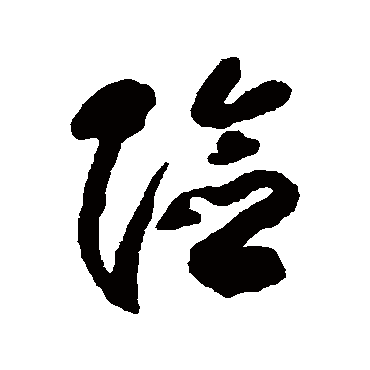
The cursive script of 險 (the obstacles part or risk) is as the following... which now looks more similar to the characters on the left side.


The cursive script of 制 (the overcoming part) is as the following... which now looks more similar to the characters on the right.

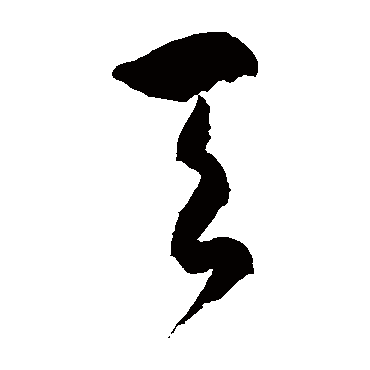
As for 天 (the nature part), the character in the middle, which is difficult to see because of the dangling plants from above, it looks like the following in cursive script.


So, let me put these three characters in the right order for you horizontally...


Though still looking mighty like 塩米粉, it does now look more like the following...


And... don't forget to read the characters from right to left... then you get... 制天險

So it is... how I overcame my "salty rice noodles" to reach "overcoming nature's obstacles."

Thursday, April 18, 2013

Mes, myselves, and Is

Repeated in my writing throughout the years are "mes, myselves, and Is."

Nothing grand and no mistakes... given my split-headed existence and as an attempt to acknowledge all the voices etc in me... there came... "mes, myselves, and Is."


Monday, April 15, 2013

From Ontogeny Recapulates Phylogeny to Copegeny and Ratogeny

One phrase I learned in the first class in the human development department and forgot how them words were spelled... Ontogeny Recapulates Phylogeny... as per evolutionary theory.

According to the Merrian-Webster Dictionary online:
  1. Ontogeny:  The development or course of development especially of an individual organism
  2. Phylogeny: The evolution of a genetically related group of organisms as distinguished from the development of the individual organism (ontogeny) 
The "geny" part is associated with genesis...

For instance... what is pathogeny?  That'd be the genesis or development of pathology... illness, disease.

Remember my multiglot?  Since glot is about "tongue, language,"  what would glottology be?  Ya, the genesis of language.

Look at all these words with genies... I decided to create a word or two myself...  

What about copegeny?  The development or the course of development for coping? 8-O

Or, Ratogeny... the development or the course of development of Ratology? 8-O lol

OK... think it is enough for me to create two examples of neologism in a day... words communicable amongs mes, myselfves and Is...  lol

Saturday, April 13, 2013

Gone with the wind... pass wind?

This British gentleman was trying to tel me this joke yesterday...

"A guy wants to pass wind in a crowd and he decided to do it when the music was loudest... And he did it but everyone heard it.  Why?"

I didn't have a clue...

"Because he had the headset on."

I still did have a clue until later... when I realizing... his passing wind is my passing gas... 8-O lol

Neurosis 精神官能症

Heard of this term before but never quite understood what it was... 精神官能症.

Then, I heard of it again today...  精神官能症 while still have no idea what the heck it is...

Ended up...  精神官能症 is neurosis la!

Apparently, I know neurosis but not  精神官能症... while Chinese my first language... lol 8-X

Friday, March 8, 2013

帶塞 (shitluck)

I have never heard of the phrase "帶塞" (Dài sāi) in Mandarin my entire life until last year... When asking my mom where this expression might have come front tonight, I realized that she had no clue such an expression exists.

I was once told that the 塞(Sāi) in 帶塞 (Dài sāi) might have come from the word "屎" in Taiwanese, which is pronounced as (Sāi).  In this case, the direct translation of 帶塞 (Dài sāi) would be "carry shit" with 帶 meaning "carry" and 塞, in Taiwanese, meaning "shit."  In other words, when someone is 帶塞,  it means the person is well-endowed with shitluck... or a magnet of sheer bad luck.
However, earlier tonight, I found an interesting posting online where the author, drawing references from ancient Chinese history, tried to make the argument that the expression "帶塞" (Dài sāi) actually came out over 2000 years ago all the way back in the Han dynasty and is related to the tough luck 蘇武 (Su Wu) had when  assigned the task of "帶團出使塞外" (leading the diplomatic team on a mission beyond the Great Wall).  Because of this mission, 蘇武 (Su Wu) endured 19 years of pure suffering.  This is why people considered "帶團出使塞外" (leading the diplomatic team on a mission beyond the Great Wall)--shortened as 帶塞 (Dài sāi) as pure shitluck...  Really interesting argument although I am not quite sure how true it is... lol

How can you use this expression?

Some people dare not watch the ball game because they feel they are very 帶塞 (Dài sāi).